11/02/2026
Get Local Businesses to Sponsor Your Student Broadcast
Short answer: get your district's written okay first, then work out what the program needs this year and divide it into a short menu of sponsor packages. Start with five businesses someone at the school already knows, and repeat a simple routine of asking and following up for 30 days. Our free Sponsor Kit has every letter, script and checklist for that month already written.
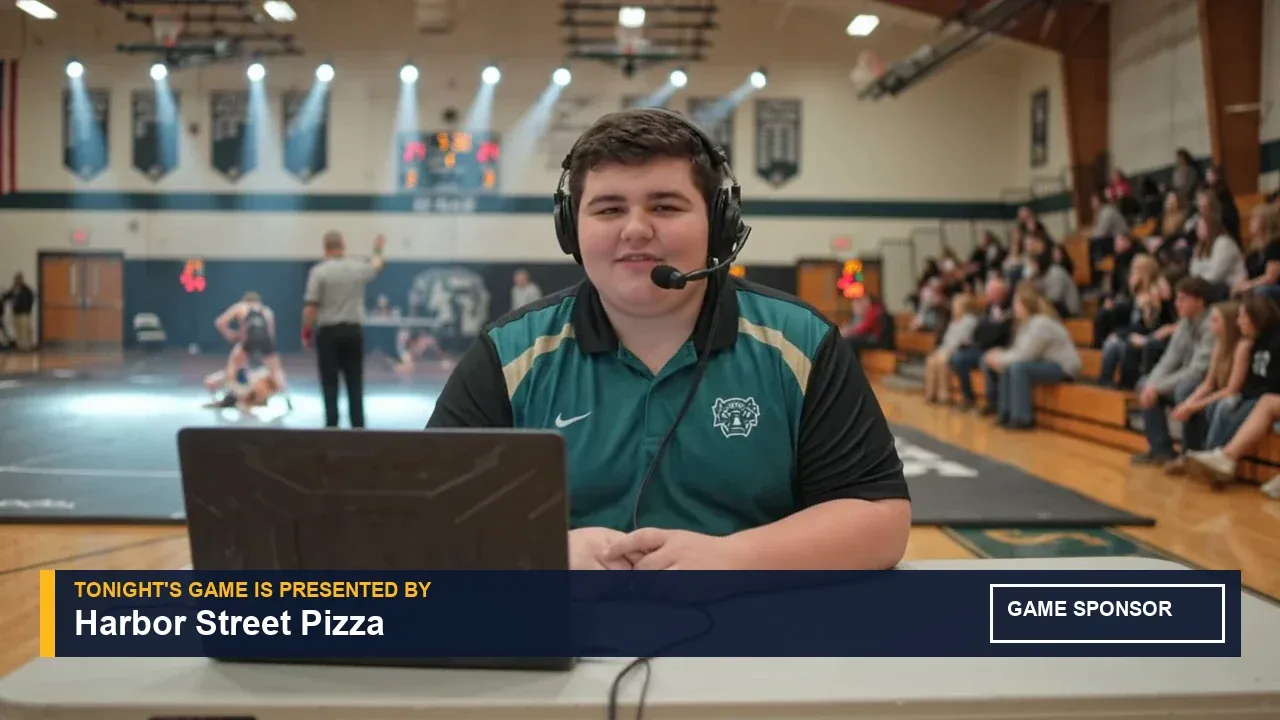
Most schools that want a student-run broadcast program stall at the same place: there is no line in the budget for it. Asking businesses for money feels like one enormous job. It is a skill a school can learn in a month, and the steps below are the order to learn it in.
Get the district's yes before the first call
A sponsor who is promised something the school then has to refuse is worse than no sponsor. Before anyone contacts a business, take these questions to your principal or athletic director and get the answers in writing:
- Does district policy allow sponsorship on school-run streams and broadcasts at all?
- Which business categories are off limits? Alcohol, vaping, gambling, firearms and political campaigns are the usual ones, but your district's list is the one that counts.
- Who approves each sponsor, and how long does approval take?
- Where must the money go: the school activity fund, the athletic account or a booster club?
- Is there a standard sponsorship agreement you have to use?
Ask with a plan, not a question. "We would like to ask local businesses to sponsor the student broadcast, using this menu, and send every sponsor to you for approval before it goes on air" is far easier to approve than "can we get sponsors?" The kit's district policy checklist puts every one of these questions on a single page you can hand over.
Then name one person who owns the outreach. Without an owner, the work waits for "someone" and never starts.
Price backward from what the program needs
Most sponsorship advice starts with packages. Start with the total instead. Add up the equipment still to buy, a repair fund, software and internet, and student supplies, then subtract what the school or booster club has already budgeted. What is left is the amount to raise.
That number decides your prices. Here is the kit's own example, for a made-up program raising $6,000. The packages add up to $5,950, close enough to show the method. It is not a price list:
| Package | What the sponsor gets | Price | How many | Total |
|---|---|---|---|---|
| Season Presenting Sponsor | The broadcast named after them, a logo on every event, mentions at the open and close | $2,000 | 1 | $2,000 |
| Game Sponsor | "Game of the Week" for one event, with a logo on screen throughout | $500 | 4 | $2,000 |
| Halftime Feature Sponsor | A 15- to 30-second halftime spot at a set number of events | $300 | 3 | $900 |
| Supporter | A logo on a rotating supporter slide at every event | $150 | 7 | $1,050 |
| Total | $5,950 |
Two checks keep the prices honest. First, compare them with what a local business already pays for a fence sign, a game program ad or a local radio spot, because that is what the owner will compare you with. Second, keep one package small enough that an owner can say yes on the spot without taking it to anyone.
Put only what you can deliver every time on the menu. If your streaming software cannot show a logo reliably yet, leave logos off this season. Our build-out details page shows what each equipment level can do.
Start with five businesses someone already knows
The best first prospects are not the biggest businesses. They are the ones with a reason to care about your students: a parent who owns a pizza shop, an alumnus with a dealership, the orthodontist whose patients sit in your stands.
List at least 20 businesses, then score each from 1 to 5 on four questions and start at the top:
| Score | The question |
|---|---|
| Connection | Does anyone at the school know the owner or manager? |
| Fit | Do their customers look like your viewers? |
| Ability | Can they afford your smallest package? |
| Timing | Is there a reason to ask now, such as a new location or a busy season? |
Make the first five to eight contacts warm introductions, where someone who knows the owner reaches out first or comes along. A warm introduction is usually the strongest advantage a school has. Look for owners in your parent newsletter, your booster club's donor list, your game program's existing ads, and your chamber of commerce directory.
The 30-day routine
Outreach feels like one big task. It is really a short routine repeated:
| Days | What you do |
|---|---|
| 1 to 3 | Get the district's rules and written approval. Name the owner. |
| 3 to 5 | Set the funding goal, the menu and the prices. |
| 5 to 7 | Build and rank a list of at least 20 businesses. |
| 8 | Send the first five to eight warm introductions. |
| 9 to 12 | Send the pitch letter or email to the rest of the top of your list. |
| 13 to 16 | Follow up on everything unanswered, by phone or in person. |
| 17 to 24 | Hold sponsor meetings, close the yeses and send agreements. |
| 25 to 30 | Collect logos and payment, schedule the first mention, send the first thank-you. |
Most replies come to a follow-up, not the first message, so the kit spaces two follow-ups five days apart. Expect most answers to be "no" or "not now". That is normal and it is not a verdict on your program. The routine works because it keeps you asking.
A visit usually beats an email with small, owner-run businesses. Bring the menu, and bring a student if you can. Owners respond to students who ask for themselves.
Keep on-air lines on the sponsorship side
If the money is paid to a tax-exempt booster club or school foundation, the IRS draws a line that is easy to miss. Its page on advertising or qualified sponsorship payments treats a payment as sponsorship when the business gets only acknowledgment in return, and as advertising when the message promotes it.
| Counts as acknowledgment | Turns it into advertising |
|---|---|
| The business's name and logo | Qualitative or comparative claims ("the best in town") |
| Its location, phone number and website | Prices, discounts or savings |
| A value-neutral description of what it offers | An endorsement |
| Being named the exclusive sponsor of the broadcast | An inducement to buy ("come in this week") |
The same page says a single message that contains both is advertising. It also excludes payments that depend on broadcast ratings or other measures of public exposure, which is one more reason to price a package by what it includes, not by how many people watch.
In practice, this is how to write the lines your student announcers read: "Tonight's game is brought to you by [business], [what they do] on [street]. Find them at [website]." The kit's on-air section gives lines at 5, 10 and 20 seconds in that shape. Separately, never promise a sponsor a tax deduction; that depends on who receives the money and what the sponsor gets back.
Label the sponsorship on YouTube replays
Many school broadcasts end up on YouTube, and the YouTube Help page on paid product placements and endorsements says that a video featuring sponsorships has to tell YouTube so by selecting the paid promotion setting in its video details. Doing so adds a disclosure label at the start of the video.
That page describes videos and does not mention live streams. For a sponsored game, set it on the replay and on every highlight that carries a sponsor's logo or end card. If you stream somewhere else, read that platform's sponsorship rules before you sell a placement on it. Some restrict on-stream sponsorship or control the ads that run on your stream.
Be ready for the questions a sponsor brings
Brandager's guide for owners, why your business should sponsor a high school media program, tells a business what to ask before it says yes. Have your answers ready:
| What the owner will ask | Where your answer comes from |
|---|---|
| What exactly is included, and for how long? | Your menu and the one-page agreement |
| How many other sponsors are there, and at what level? | The "how many" column of your menu |
| Will you share viewing numbers? | Your streaming platform's analytics, sent as a regular report |
| Who owns the footage, and how can we use it? | Your district's media policy; decide this with your approver before the first meeting |
| Is this advertising or a donation? | Who receives the money, and what the sponsor gets back |
If you have no viewing numbers yet, say so. "We are launching this season and will report real numbers after the first month" is honest and it works. Never estimate upward: a sponsor who finds out later does not renew, and tells other businesses.
Deliver, report and ask again
Renewals decide whether a sponsor program lasts. Give one student the job of logging which mentions aired and saving a screenshot of each logo on screen, because that log becomes your proof. Send each sponsor a short report at least once a season with the events, the mentions and the real viewing numbers, even when they are small.
Send an end-of-season recap with photos of the students within two weeks of the last event, and start the renewal conversation then, not the week before next season. Offer returning sponsors first choice of placements. If one leaves, ask why: that answer will improve next year's menu more than anything else.
Get the free Sponsor Kit
The Sponsor Kit is free. Enter your name and email and we send you an editable Word version, a PDF for reading on a phone and a tracking sheet. It holds everything above with blanks to fill in, plus the pitch letter, emails, phone and visit scripts, objection answers and a one-page agreement. It is a general guide, not legal or tax advice, and your district's policies come first.
Still planning the program itself? The Program Blueprint builds a custom plan for your school, including a Sponsor Kit written for your sports, your venues and your goals, with a free preview first. Questions about starting a student media program? Get in touch.
Researched and drafted with AI, then reviewed and edited by the site's editors.