02/26/2025
Start a Student-Run Broadcast Program at Your School
Your students already film everything. The question is whether the school gets a media department out of it, or a phone in the bleachers.
A student-driven broadcast program covers your games, ceremonies and performances with your students behind the cameras — and it teaches them skills that transfer directly into work: production, audio, commentary, graphics, directing a live event under time pressure. The school controls how it is seen, families who cannot attend still watch, and the students running it leave with something to show.
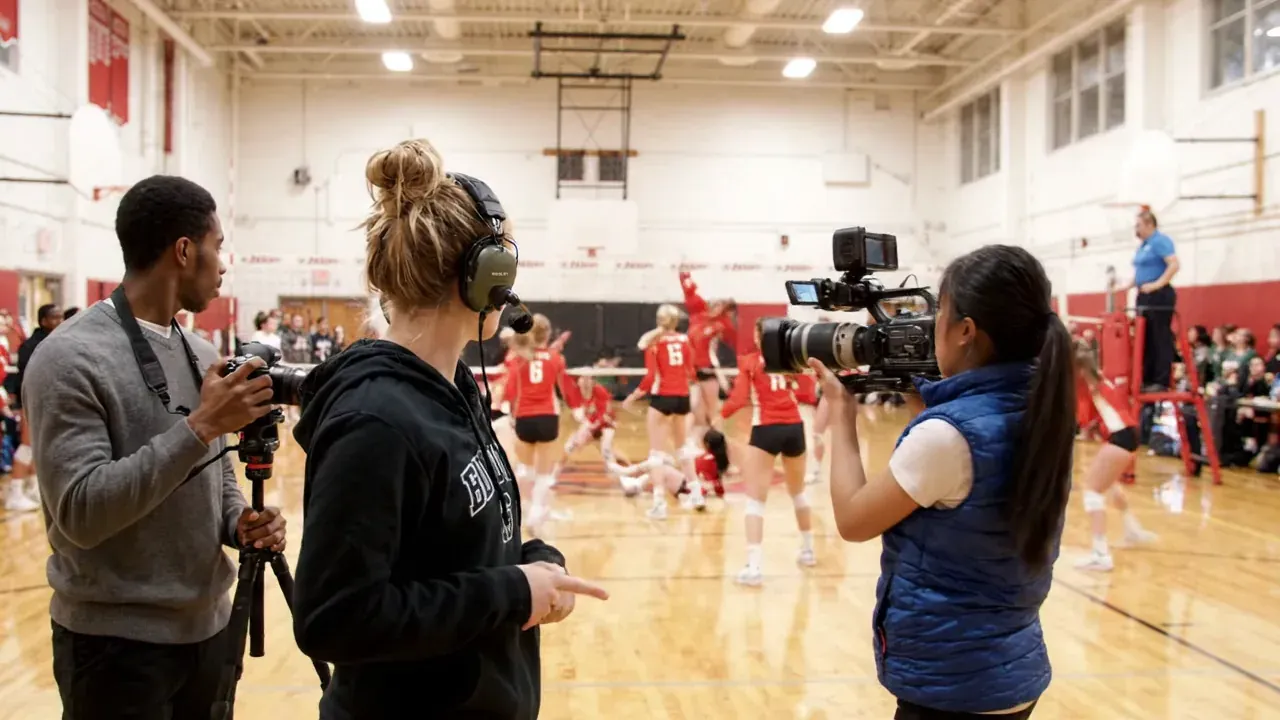
For more details, check out this page with our latest setup suggestions for YOUR high school!
This is a plan intended for high schools who are considering starting their own student-driven Media Production Department. Some schools have a journalism department with their own newspaper. Some have a “yearbook” class to create the school’s yearbook. Take that basic idea of student-driven and apply that to a TV station!
See what your school would need
Answer a few questions and get a free plan preview on the spot: the equipment level that fits your budget. About twelve minutes.
Which level fits your budget?
About how much could your school put toward video and audio equipment?
One question, not the whole plan. You can build the full plan afterward.
Shoestring
Starting with limited funds: consumer-friendly tools and a few rugged essentials.Enough for morning announcements, short packages, simple live streams and student training.
Under $5,000
Mid-level production house
A legitimate studio and a capable live event team.The best balance of price, reliability and student usability for most schools.
$5,000 to $15,000
Top-level professional
A flagship department: multiple studios, full live sports coverage and student news.Live switching, ISO recording and a route toward broadcast-industry workflow.
More than $15,000
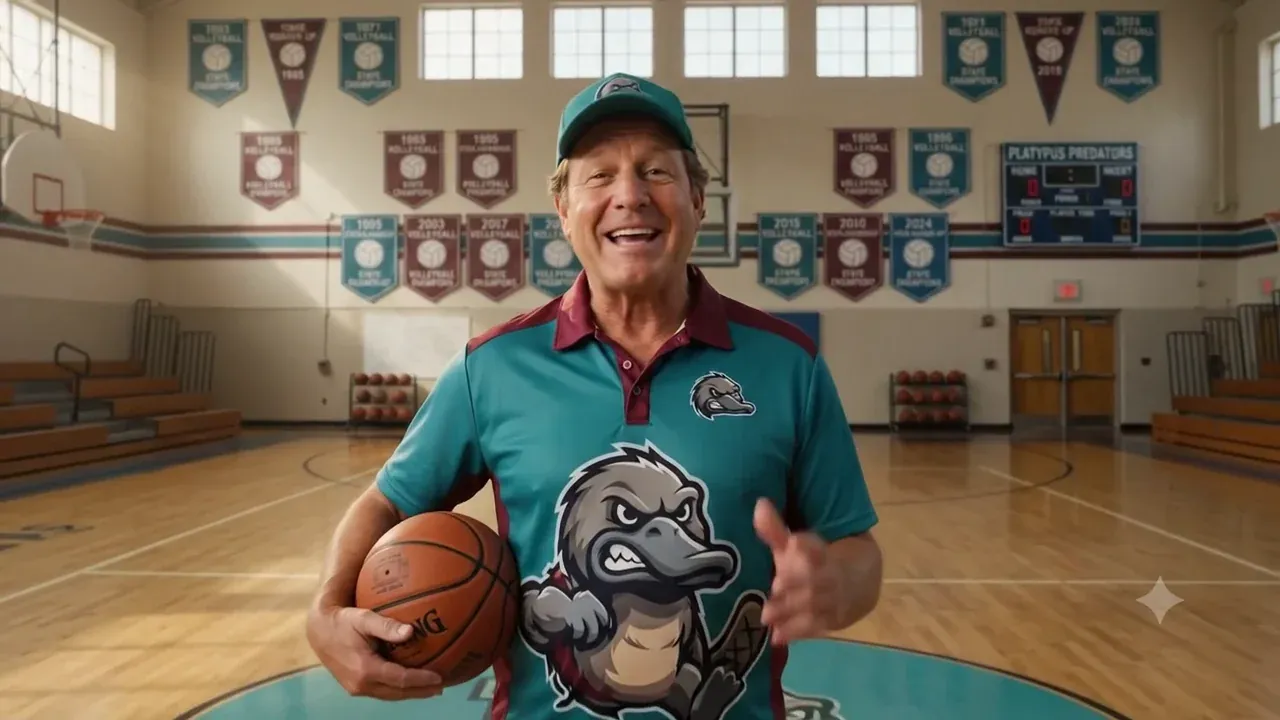
Meet Coach Grinkler. Our AI spokesperson has one job: getting your school to build its own student-run broadcast program. He has opinions, and a lot of stories about 1986.
Meet Coach Grinkler. His first video is on its way.
Why schools start one
Real skills, not a hobby club
Students fill genuine production roles — director, camera, audio, graphics, commentary — and learn them by doing the job on a live event with an audience watching.
Your school tells its own story
Every game, concert and ceremony covered the way the school wants it covered, on a channel the school controls, instead of whatever a phone in the stands captured.
Families who cannot attend still watch
Grandparents, deployed parents, families across the state and students who are ill. A livestream turns an event that seats a few hundred into one anybody can attend.
Something colleges and employers can see
On-camera athletes and performers get footage worth sending. The crew behind the camera get a portfolio and a reference for a real technical skill.
Seasoned broadcast talent at your events
We have seasoned broadcast talent who bring fun and excitement to all sorts of school events, from games to ceremonies and performances.
They take on the on-air work, and they mentor and interview students while the stream is running, so your students learn on the air from someone who does it.
How a department gets started
- Decide what you want to coverGames, ceremonies, announcements and performances make very different demands
- Find the staff ownerA department with no teacher behind it is a club, and clubs end when their teacher leaves
- Design the student rolesWho directs, who is on camera, who runs audio, who calls the game
- Then buy the equipmentScaled to what you actually plan to broadcast, in a sensible order
- Train the first crewAnd have them write down how it runs, so the second crew can read it
- Run it, and keep it runningThe school owns the program; we stay reachable rather than necessary
Equipment comes fourth, not first. A program that outlives its first crew is one where the roles and the routine were designed before anything was purchased.
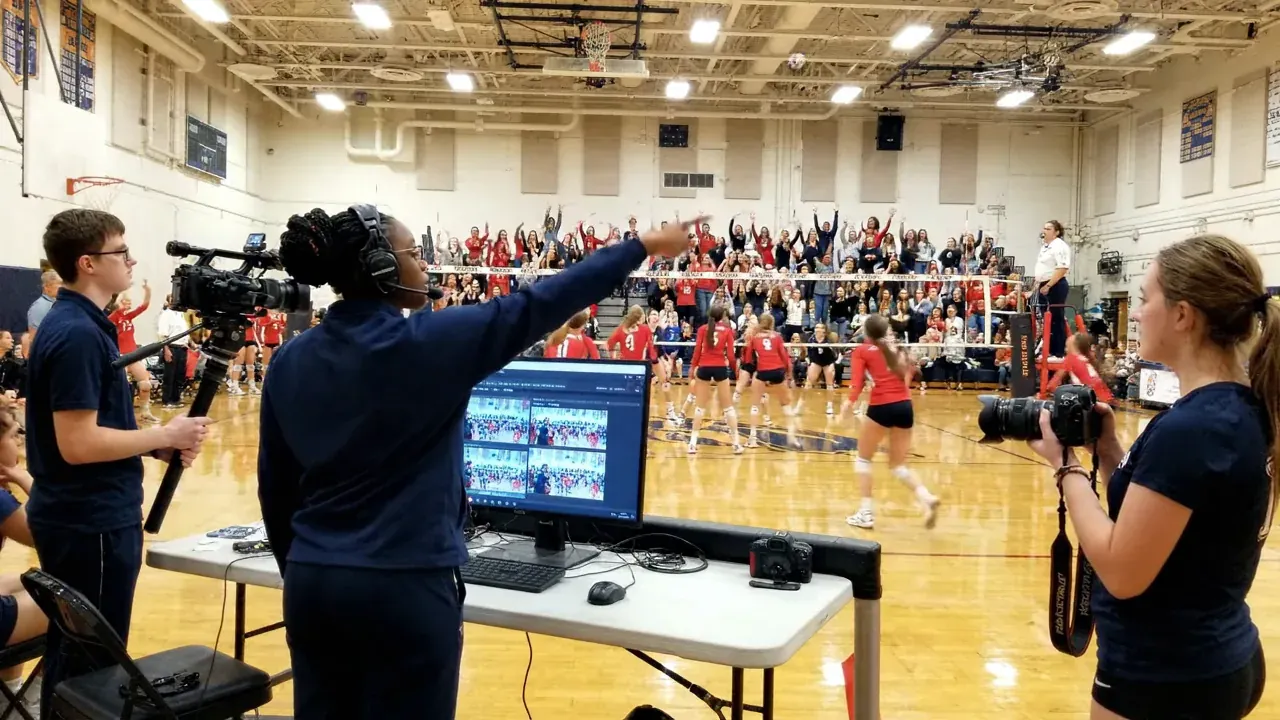
A school's own crew running a live match: cameras on the floor, a director at the monitors, and a student pointing out the next shot. This is the job the program trains for.
Overview
High schools can provide real-world ON THE JOB training for high schoolers to effectively produce a variety of broadcast events while also learning how to positively interact with media outlets in order to be confident, media-savvy, and highly competitive in their public lives beyond high school.
Let’s face it, cameras are everywhere these days. Why not cover school events and turn them into real-world on-the-job training, while elevating the school’s public image, develop media-savvy students, encourage more participation and interest, and help raise revenue for the boosters?
Summary
Every school event is an opportunity for students to learn and become more media savvy on both sides of the video camera. Whether it’s sports, a cheerleading competition, a band or concert performance, or a play, these live events represent real life practical classroom opportunities to understand how to present one’s self to a pervasive media and virtually anyone with a cellphone (in front of the cameras) and how to plan, produce, cover, and portray these events to an interested audience as a part of the media (behind the cameras).
To be competitive, the need to understand and harness the power of digital media is a growing necessity. This applies not only for schools competing for students and financial benefactors but to every student as they face new challenges in navigating their future careers and professional lives.
Throughout its busy year, a school hosts or participates in many events. Their students compete and represent the school in many different sports, performances, arts, and other competitions.
Every event the schools’ students participate in is an opportunity for the school to become more media savvy and cover with their own, fully autonomous, student-led and run Broadcast and Media Production Department.
This is a general plan that we hope will be considered to create a more thoroughly-tailored plan to suit your school’s distinct needs.
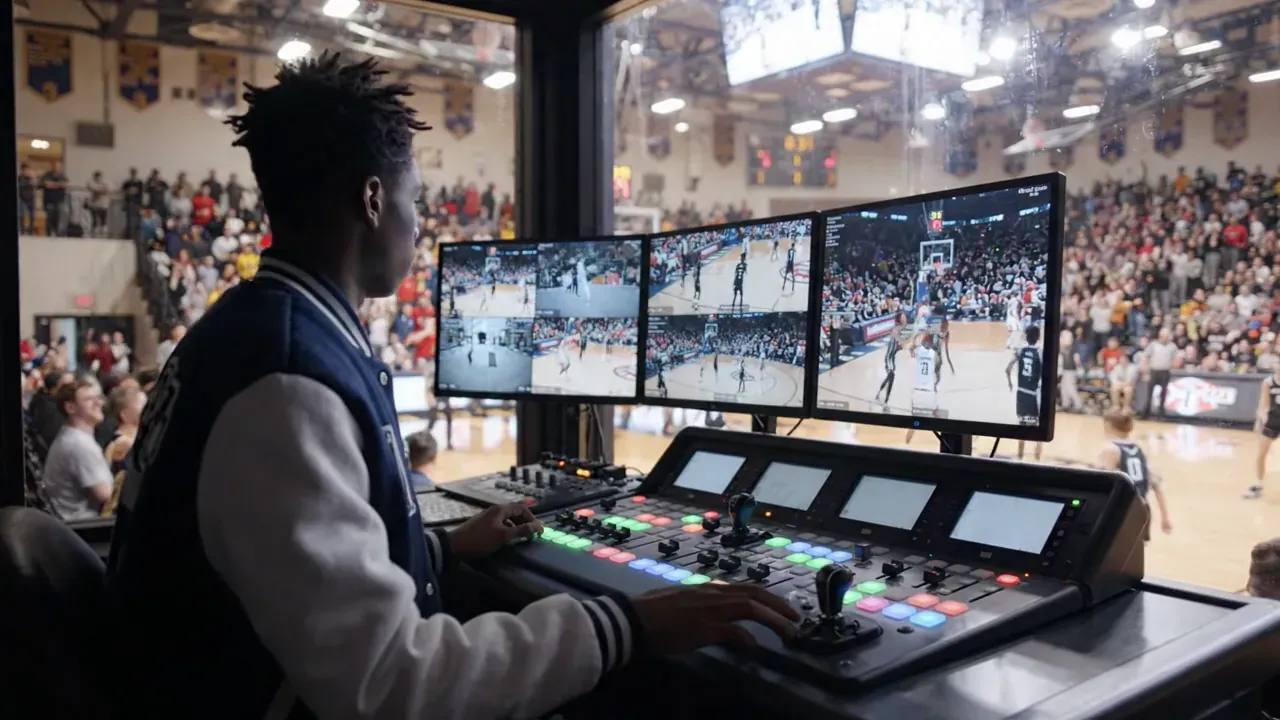
Directing, switching and audio are real jobs, done live and under time pressure.
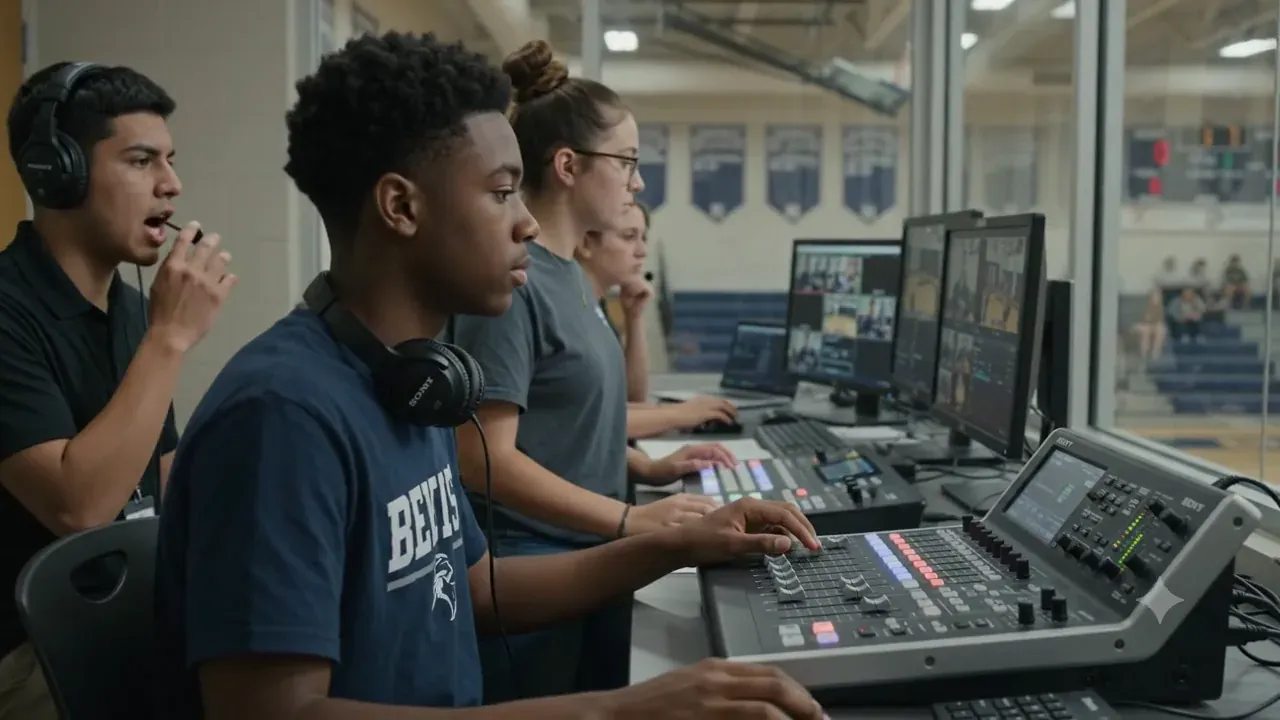
Behind the Camera: Student On the Job Training Opportunities
These are only some of the roles an in-house Media Production Department would provide ON THE JOB training for.
The eight roles and what students learnTap to open
| Job Title | Description | Employable/Life Skills |
| On-Air Talent, Commentators & Announcers | Every sporting event needs announcers and commentators! Sometimes this involves the same person doing both. | Communications, journalism, creative writing, public speaking, performing arts |
| Production Directors | Coordinates a production team to cover an event or a performance for a live broadcast. | Communications Various production skills and techniques, equipment, systems, hardware and software. Understanding how to set up a live stream broadcast, queue transitioning between cameras, graphics, previously-produced video segments. |
| Graphic Artist /Animator | Create graphic slates, titles, overlays, animations, etc. | Learn a variety of techniques, skills and software that translate into real-world, employable skills. |
| Production Assistants | Perform media production duties from setting up video cameras, livestream feeds, microphones, lighting, other equipment and cabling. | PAs learn a variety of media production skills and can work up to become a director. |
| Videographer /Camera Operator | Setup, maintain and operate live cameras. | Understanding framing, light exposure, focal adjustments. |
| Chyron /Scoreboard Operator | Different events will need data displayed in a professional manner during a live stream. | Learn different ways to operate software and other equipment that may include live data feeds. |
| Business Admin & Management | Operation decision-making, managing agreements, budgets, division of labor, supervision, disputes. | Learn hard skills and experience operating and managing a business. |
| Marketing & Social Media | Manage the marketing and social media of the operation. | Learn a variety of techniques, skills and latest industry best-practices. |
On camera, a student calls the match while the crew behind them runs the show.
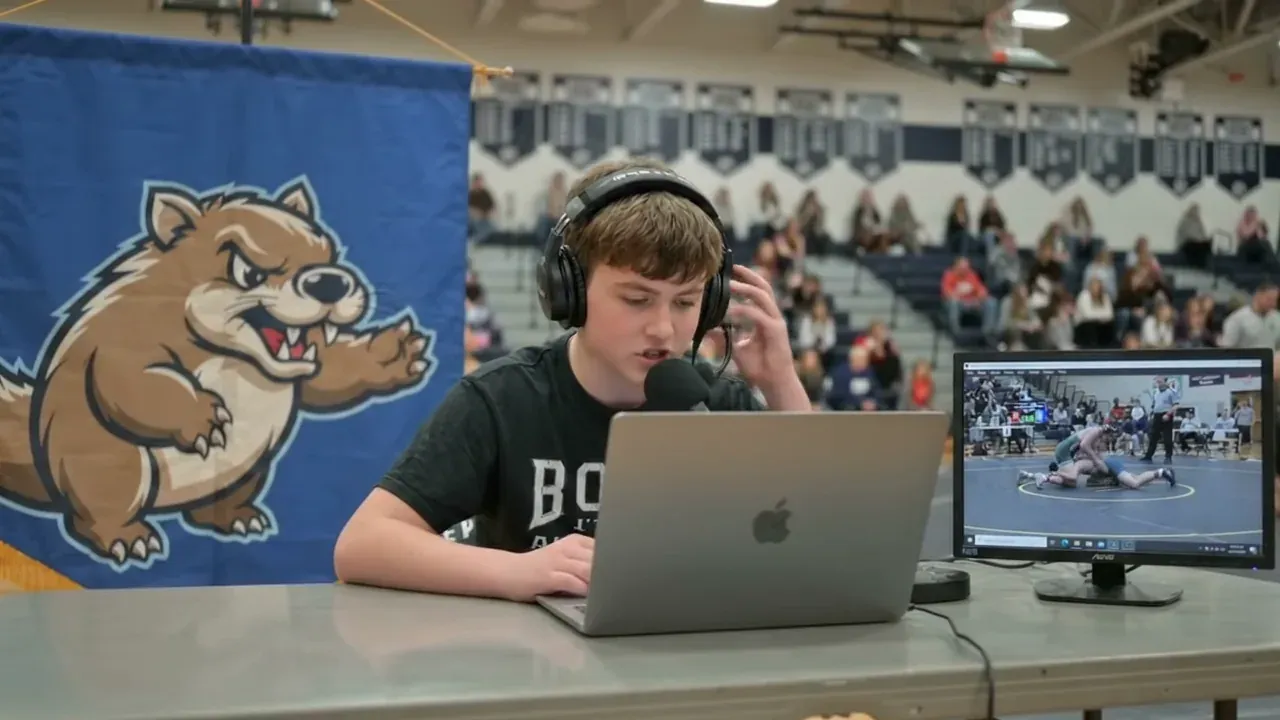
On Camera: Student Featured Media
This highlights some real-life scenarios that will result from covering live events and help explain some of the potential benefits.
Four scenarios and their benefitsTap to open
| Scenario | Benefits |
| School covers an event through live stream broadcast. | Provides on the job real world training for students. Provides student performers and athletes opportunities to interact with the media on-camera, which will help them become more marketable to colleges later. Encourages better behavior among students, parents and other audience members at all events. |
| School hosts a special competition or event and streams it live. | School promotes and controls its public image while providing parents or family out of the area an opportunity to stay connected and involved with their students. Potential live stream revenue is captured by school for use in fundraising, not a live stream company. |
| Athlete gets interviewed after the game. | Students learn how to not only be comfortable answering live questions but they can study and improve their performance during such interactions. |
| High school coach is highlighted interacting with team on live streams. | School benefits from having a coach that can be personable that could help attract like-minded parents and self-selecting student recruits with a higher likelihood of being a cultural fit with a particular school. |
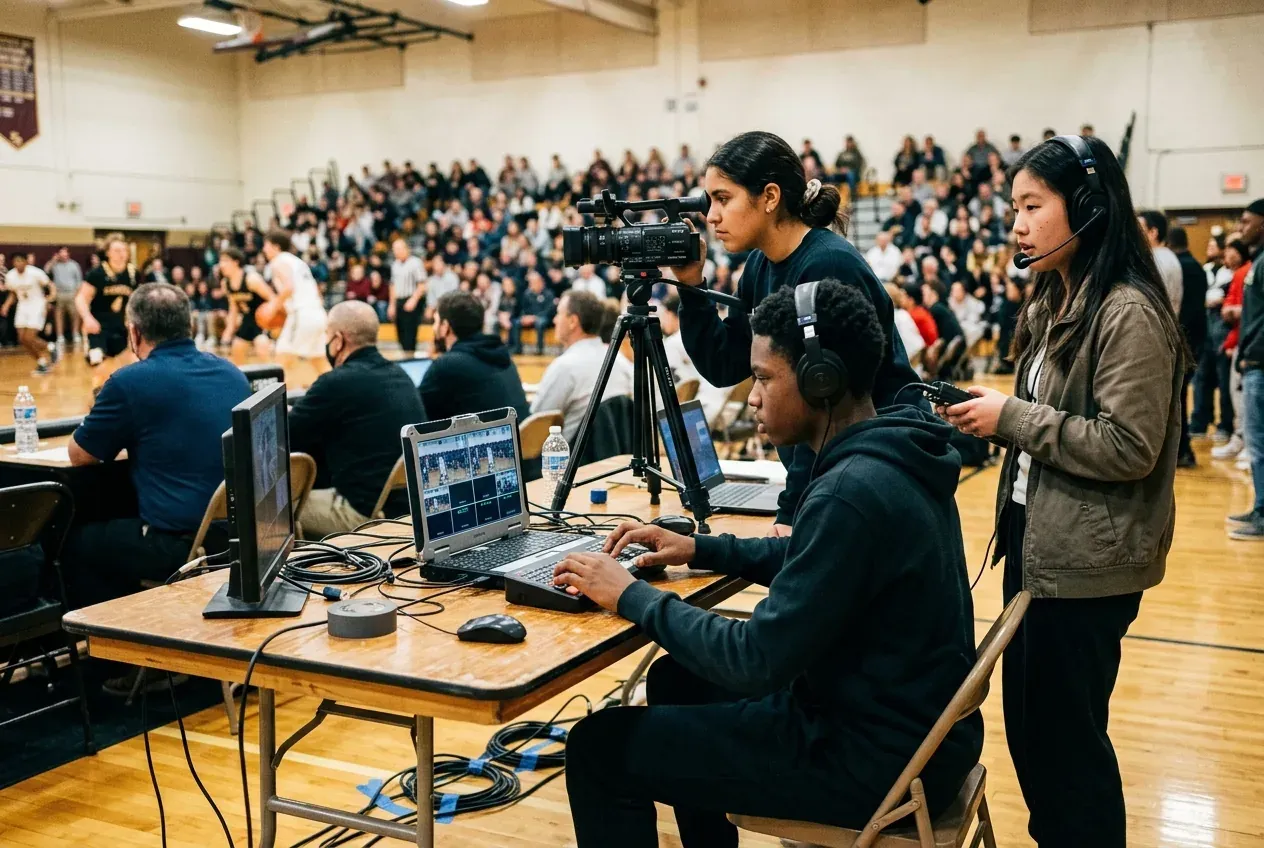
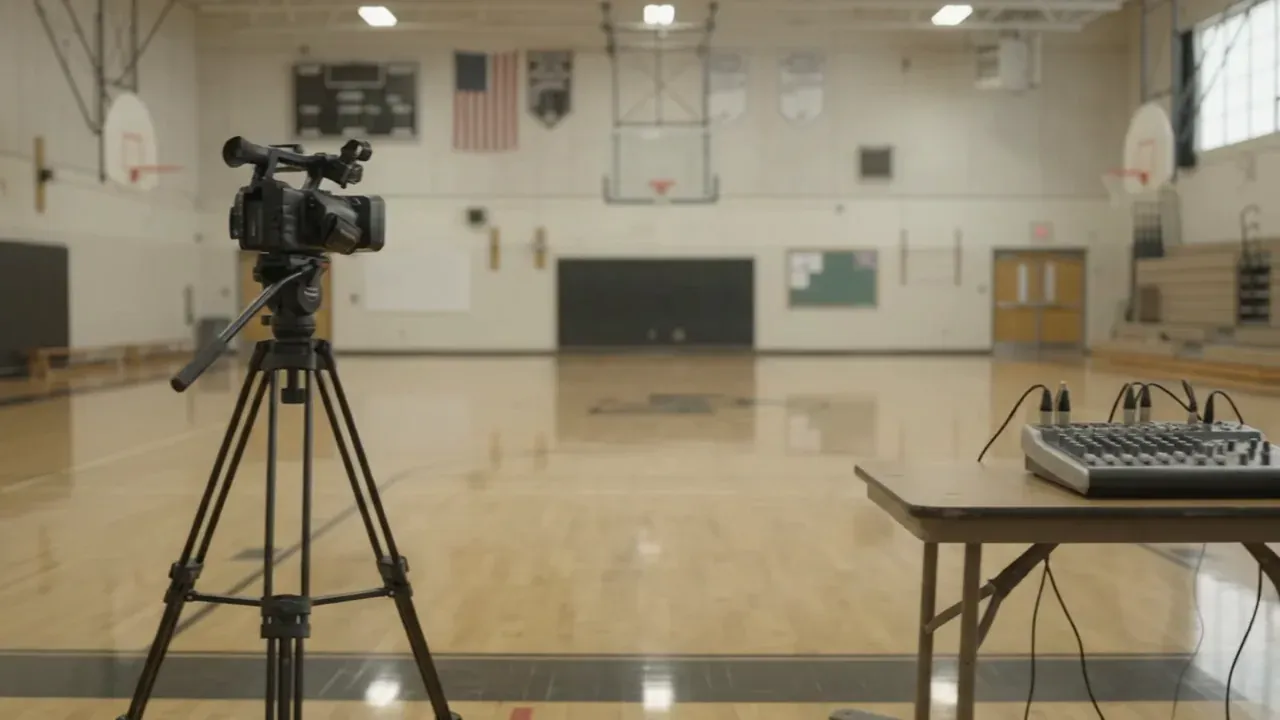
Every program starts somewhere. Often it is an empty gym and a table.
Projected Costs
Though we can strive to be as professional as we can, this isn’t ESPN. It’s a learning and training opportunity for your students. Here is a breakdown of a basic list of equipment and other incidentals that are needed to start this program. The requirements to start a Basic Media Production Department, and the minimum for what would count as a semi-professional setup, are given below based on 2025 average costs.
These are budget estimates for a school to plan against, not a quote — including the consulting line, which is what this kind of engagement typically costs anywhere, not a Next Day Videos rate. Prices from 2025 will drift; treat the ranges as orders of magnitude.
| Item | Reason/Use | Estimated Cost Range |
| Consulting fee | Depending on scope of plan | Between $1,000 – $10,000 |
| Setup & Training fees | Incidental costs based on acquisition, set up of equipment and needed training. | Depends on full service or minimal assistance needed |
| A new PC laptop | Operating live stream software and other basic video and graphics processing. | $1,000 – $2,500 |
| Video capture card/device | This allows streaming software to show multiple feeds from video cameras. | $600 – $1,500 |
| 3 to 5 HD or 4K Video cameras | Capture video, prefer high ratings for auto focus and low light. | $500 – $2,500 each |
| Tripods & mounts | Operating video camera | $200 – $400 each |
| 2 to 3 Microphones & stands | Capture audio | $200 – $400 each |
| Incidentals: Monitors, cables, wireless transmitters, remotes, other hardware | Carry signals, power, safety, bins, etc. | $500 – $4,000 |
Independent Live Streaming Companies
I have been personally involved in live streaming different events, including high school sports. These companies need content and high school sporting events is content that can draw thousands of viewers which they can then monetize.
If a school does not operate its own live streaming or set a policy on who may live stream its students, at some point, someone will try to monetize it either openly or through more stealthy means. Individuals with a cell phone can do it now, and many are doing it even without anyone at the school’s knowledge or consent.
Every school must decide if they will engage with a livestreaming company and need to be careful in their selection. We will soon be creating a new Business Directory of ones we have come to know and trust.
Livestreaming is the school's to control. Decide who is authorized to stream your students and events, put it in writing, and tell people: notices in programs, announcements during the event and visible signs at the entrance. Then stay vigilant, because anyone with a phone can stream without asking.
Run a livestreaming company?
Tell us about your company and learn how our vetting and referral process works.
FAQs
What about privacy and consent?
Though out of the scope of this document, it is critical that the schools conduct a legal review before embarking on a Media Production Department enterprise.
Are there NIL considerations?
Questions regarding NIL should be addressed and complied with but are out of the scope of this document.
Isn't this exploiting the kids?
We contend that if a school does not do this, random social media influencers, streaming companies, TV stations, parents and students already are. The difference is that doing it this way ensures the school will not only be able to control content and the narratives, they can provide real-world training on how to deal with the media and how to effectively produce media.
Can schools monetize this?
If allowed, it is possible the boosters can also raise modest revenue from streaming and managing their own YouTube channel as well as getting sponsors to pay for advertisements during events. Students may benefit from being involved in the responsibility and learning the business and management side of media as well.
Questions about this document can be directed to Aaron Belchamber. For more inspiration and ideas of how to set up a Student-Driven Broadcast & Media Production Program for High Schools, get in touch.
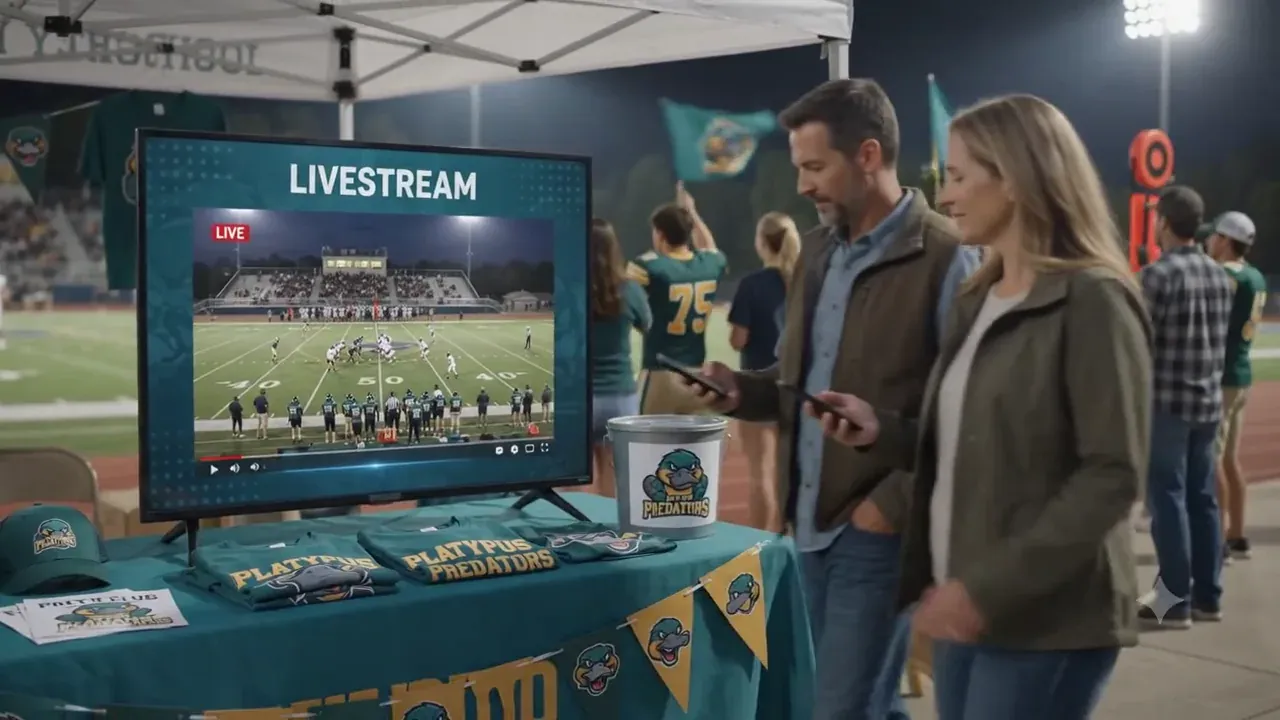
Families who cannot be at the game can watch it, and the booster table can show it off to the ones who are.
Paying for it
Most schools that want one of these do not have a line in the budget for it, and that is usually where the conversation stalls rather than where it ends.
Local businesses fund exactly this kind of program: it is visible, it is student-facing, and their name sits on something the whole community turns up to. Approaching a sponsor before approaching the budget is often the shorter path, and it is worth understanding what the sponsor gets out of it before you ask. Our free Sponsor Kit has the letters, scripts, agreement and checklists to do it, step by step.
For a business considering sponsoring a program
The Student-Run Livestream & Production Program
Program Blueprint
Answer a questionnaire about your school and get a custom plan: equipment in buying order, crew roles from camera to caption editor, a 12-week launch timeline and a Sponsor Kit. $89, credited toward the packages below if booked within a year, with a free preview first.
Guided Launch
Your Blueprint, a review call, training and check-ins, plus two live events with our seasoned broadcast talent, coaching your student announcers. Florida and southeast Georgia, from $5,000 (estimate).
Build & Train
We help you choose the equipment you buy and guide its placement and set-up (no drilling or permanent installation), train your students in every crew role, captioning included, run five live events with our seasoned broadcast talent while they take over, and include the Student Crew Training Handbook. Florida and southeast Georgia, from $10,000 (estimate).
Want one of these at your school?
Start with the free Blueprint preview, or tell us what you would want to cover and who could own it, and we will tell you what standing it up would actually take. Free to ask, and no obligation.
Start your free Blueprint previewTalk to us about your school
Images of students and school scenes on this page are AI-generated illustrations, not photos of a real school.